




















Version française Recherche Recherche UFR
- Recherche - SSMM,
Séminaire LICAÉ : Luigi Tamé
Publié le 4 décembre 2025
–
Mis à jour le 26 janvier 2026
Body structural representations of the glabrous and hairy skin surface in aging
Date(s)
le 12 février 2026
Horaires : 13h30-15h30
Lieu(x)
Bâtiment Alice Milliat (S)
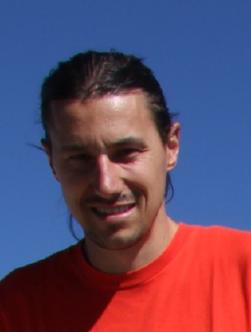
Luigi Tamé
Senior Lecturer - School of Psychology - University of Kent
Senior Lecturer - School of Psychology - University of Kent
Knowledge about body representation is drawn from different sensory modalities but relies strongly on tactile information. The body structural representation (BSR) refers to a spatial map of the body in which the spatial configuration of different body parts is defined. Previous research has demonstrated that the BSR is influenced by external factors such as body posture, and follows an inverted U-shaped trajectory across the lifespan declining after the age of 60. However, the extent to which physiological ageing affects the definition of BSR remains unclear, particularly concerning the different types of representations associated with distinct skin types (glabrous vs. hairy). I will discuss results from two experiments we conducted using an adapted version of the "in-between" test. Healthy younger adults (N=24) and healthy older adults (N=24) received tactile stimulations on the fingertips and estimated the number of unstimulated fingers between the two touched ones. The type of skin region (glabrous vs. hairy) was varied across conditions while hand posture was kept constant (palm down). We found a significant difference in fingers’ numerosity estimation between the glabrous and hairy skin stimulation. Specifically, greater numerosity was estimated for glabrous skin, but this effect was only observed when non-adjacent fingers were stimulated. This trend was consistent across age groups, but in older adults, the distinction between glabrous and hairy skin became more pronounced. Our findings suggest that ageing selectively affects the BSR, with the representation of hairy skin being more impaired than that of glabrous skin.
The talk will be in english. Co-organized with DysCoLab
The talk will be in english. Co-organized with DysCoLab
Mis à jour le 26 janvier 2026
Contact :
Morgan Beaurenaut : morgan.beaurenaut@parisnanterre.fr